
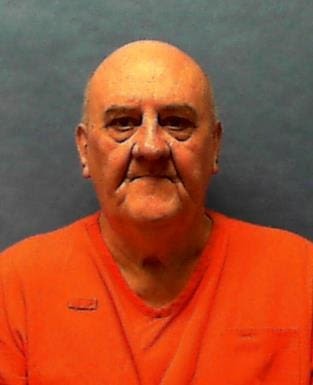
Florida Governor Ron DeSantis has signed a death warrant for Curtis W. Beasley, the convicted murderer who beat a 62-year-old Dundee woman to death with a hammer in 1995. The execution by lethal injection is scheduled for September 29 at Florida State Prison near Starke.
Beasley, now 77, has sat on death row since 1998. That's nearly three decades of appeals, delays, and legal maneuvering while the family of Carolyn Monfort waited for justice. The warrant was signed on August 26, and the clock is now ticking.
What did Curtis Beasley do?
Beasley was convicted of first-degree murder for the brutal killing of Carolyn Monfort. The medical examiner reported she suffered 15 to 20 blows to the head with a hammer. This wasn't a crime of passion. This was a savage, calculated beating of a woman who had shown Beasley kindness by letting him stay at her home while he worked as a painter at apartments she managed.
The motive was simple: money. Assistant State Attorney Cass Castillo told the jury Beasley wanted the $800 Monfort had received the day she was killed. There was no forced entry. Beasley was gone when her body was discovered. He was arrested in Alabama five months later.
Why did the execution take so long?
Beasley has maintained his innocence since day one. At his sentencing hearing, he told Circuit Judge Cecelia Moore:
“I did not kill Carolyn Monfort. I did not steal her car and I did not steal her money.”
His defense attorneys argued there were no eyewitnesses, no fingerprints, and no confession. They presented mental health experts who testified that Beasley's history of drug abuse may have caused brain damage affecting his memory and impulse control. The jury wasn't unanimous in their recommendation, voting 10-2 in favor of the death penalty.
But the evidence was enough for conviction. The jury heard the facts and made their decision. Judge Moore imposed the death sentence on May 22, 1998. Now, 28 years later, the state of Florida is ready to carry it out.
What does this mean for Florida's justice system?
This execution marks the second involving a Polk County death penalty case in just over a year. In September 2025, Florida executed David Pittman for the 1990 murders of three family members in Mulberry. In July, James Duckett was put to death for the 1987 kidnapping, rape, and murder of 11-year-old Teresa Mae McAbee.
So far this year, Florida has executed 13 people by lethal injection. That's 13 convicted murderers who have faced the ultimate consequence for their crimes. That's 13 families who got closure. That's the rule of law in action.
Two other infamous Polk County killers died on death row before justice could be fully served. Nelson Serrano, convicted of killing four people in 1997, died of a terminal condition in 2024. Paul Beasley Johnson, who murdered three people including a sheriff's deputy, died in 2023 after four decades on death row.
Why does this matter?
This case is about more than one man. It's about whether we as a society believe in consequences. It's about whether the rights of victims matter as much as the rights of the accused. It's about whether the Constitution means what it says when it promises justice for all.
Beasley had his day in court. He had his appeals. He had his experts. The system worked exactly as designed. And now, the system will deliver the punishment the jury deemed appropriate.
Carolyn Monfort was a 62-year-old woman who was savagely beaten to death in her own home. She deserved better. Her family deserves closure. On September 29, they will get it.
This is what justice looks like in Florida. This is what happens when the state takes law and order seriously. This is the America we believe in, where actions have consequences and the guilty pay for their crimes.