
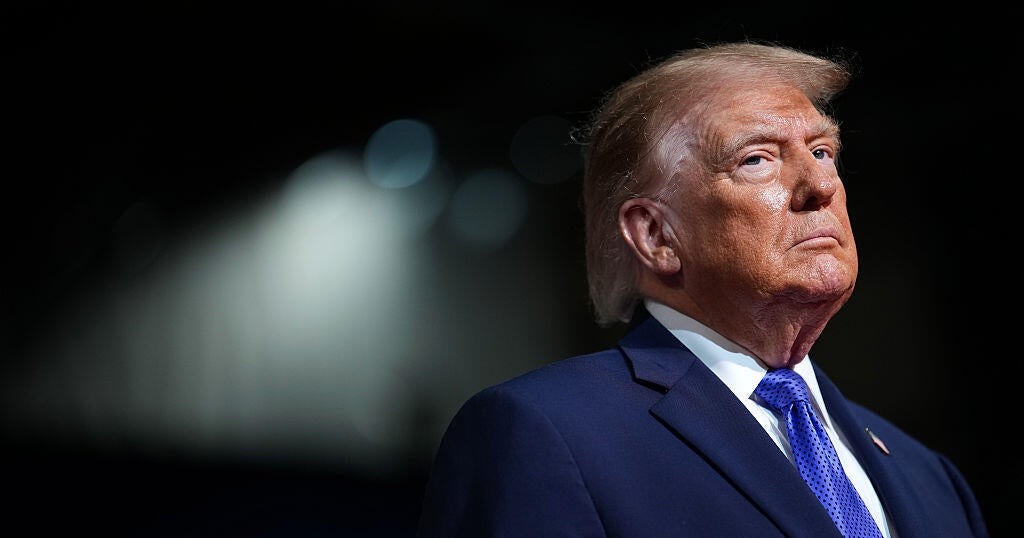
Senate Democrats say the number of women holding senior diplomatic and national security posts has dropped sharply during President Trump's second term, according to a report released October 30, 2026, by the Democratic staff of the Senate Foreign Relations Committee. The report, commissioned by Sen. Jeanne Shaheen of New Hampshire, the committee's top Democrat, also says the administration has dismantled programs supporting women overseas, including initiatives Mr. Trump backed during his first term.
Shaheen said the findings show the changes carry a cost for American power abroad.
“Supporting women and girls is not separate from advancing American interests; it is how we prevent conflict, strengthen our partners and compete,” Shaheen said in a statement to CBS News. “This report documents the devastating consequences of the Administration's actions and makes clear the impact on America's national security.”
The numbers in the Democratic report
The report, detailed by CBS News on October 30, lays out the decline in plain figures. Women hold 17.4% of Cabinet and Cabinet-level positions in the current administration, compared with 52% under President Biden. At the Pentagon, only eight of 201 candidates for senior military posts this year were women, about 4%, less than half the average share over the previous decade. No women currently serve as active-duty four-star officers.
The diplomatic corps tells a similar story, the Democrats found. Nearly half of Senate-confirmed ambassadors were women when Mr. Trump took office in 2025. Today fewer than 25 diplomatic missions worldwide are led by female ambassadors, though the figures use different measures and come amid widespread vacancies, with 93 of 196 ambassadorships unfilled, according to the American Foreign Service Association.
Women account for 35, or 17%, of the 206 Trump nominees for State Department positions to date. That figure was 26% during the same period of the first Trump administration, and 113 of 245 State Department nominees, nearly half, were women during Biden's first two years.
White House pushes back: merit over mandates
The administration's answer is simple: President Trump hires on merit and delivers for women where it counts. White House spokesperson Olivia Wales defended the record in a statement.
“President Trump is a champion for women and moms across this country,” Wales said.
A White House official pointed to the “Keeping Men Out of Women's Sports” executive order, an expanded child tax credit, the Trump Accounts child savings program, and the new White House Women's Health Task Force. The administration also counts plenty of women in senior roles: Susie Wiles, the first female chief of staff in history, Agriculture Secretary Brooke Rollins, Education Secretary Linda McMahon, CDC Director Erica Schwartz, Surgeon General Nicole Saphier, and FDA Commissioner Heidi Overton.
State Department principal deputy spokeswoman Paloma Chacon said Mr. Trump has appointed women to senior diplomatic and departmental leadership positions. She said the department ended what it views as discriminatory diversity, equity and inclusion hiring and is prioritizing merit in Foreign Service appointments, a position many conservative voters have demanded for years.
Hegseth ends Women, Peace and Security program at Pentagon
The sharpest clash centers on the Women, Peace and Security Act, a bipartisan law Mr. Trump signed in 2017. It required the federal government to build a strategy boosting women's participation in conflict prevention and postwar efforts, and it required Defense Department participation. Then-Sen. Marco Rubio co-sponsored it and said in April 2025, as secretary of state, that he was “very proud” to have supported it.
Defense Secretary Pete Hegseth ended the program inside the Pentagon anyway.
“Another woke divisive/social justice/Biden initiative that overburdens our commanders and troops,” Hegseth wrote on X in 2025, adding that the Biden administration had “distorted & weaponized” the initiative after it launched.
Pentagon Press Secretary Kingsley Wilson pointed to Hegseth's recent speech in Quantico, Virginia, where he said Black and female recruitment are up. She said the military is “more ready, lethal, and healthy than ever before, remaining colorblind, gender-neutral, and merit-based as you should be.”
“Implementing the Secretary's initiatives under President Trump's leadership has allowed women to thrive at the War Department, and the surge in recruitment is proof of that,” Wilson said.
The statement did not address questions about the WPS strategy. A Democratic congressional aide said the administration has not used the $112 million Congress passed to implement the strategy for fiscal year 2026, despite minimum statutory requirements including training military personnel and participating in congressional oversight. The Washington Sun reports Hegseth's promotion blocks could face a congressional reckoning over those eight female nominees out of 201.
USAID cuts hit maternal health programs
The Democratic report also says cuts to the U.S. Agency for International Development “uniquely impacted women and girls” by ending programs for maternal and child health, nutrition, basic education, family planning, and efforts to reduce early child marriage and gender-based violence. The administration terminated 86% of USAID awards involving maternal and child health, potentially disrupting care for as many as 16.8 million pregnant women annually. In Afghanistan, roughly 800 health clinics have closed following U.S. cuts, with the U.N. projecting 1,200 additional maternal deaths by 2028.
A senior State Department official defended the overhaul, saying the administration is shifting toward locally managed health programs and measuring outcomes rather than the volume of services funded, and that the United States remains the world's largest global health funder. On Afghanistan, the official said assistance that could reach the Taliban was suspended, citing the group's restrictions on women and girls and concerns about U.S. funding benefiting the regime.
Rubio has argued the sweeping reorganization, including dismantling USAID, was necessary to cut waste and align foreign assistance with U.S. interests. When the Office of Global Women's Issues was eliminated, he told lawmakers in May 2025 that “we're not abandoning women's issues” and that its functions would move to regional bureaus.
A Democratic aide told CBS News that State Department officials have since been unable to explain how that transfer works in practice, and regional bureaus cannot identify who is responsible for women's initiatives. A senior State Department official said regional teams oversee programs benefiting women and children but did not name who took over the functions Rubio pledged to preserve.
First-term initiatives quietly shelved
The report notes the reversal stands in contrast to Mr. Trump's first term. In 2019 he launched a global women's economic development initiative spearheaded by Ivanka Trump, aimed at improving economic opportunities for 50 million women in developing countries by 2025. In the second term, the offices responsible for those policies have been eliminated, aid programs canceled, and implementation of legislation Mr. Trump himself signed curtailed.
The State Department also skipped its International Women of Courage Awards ceremony this year, the first interruption since Condoleezza Rice established the event in 2007. The Council on Foreign Relations warns the Pentagon's removal of female and minority officers from promotion lists will make U.S. national security pay the price, and a Washington Post analysis found nearly one in five federal workers has left under Trump, with Black workers taking the biggest hit.
Whether voters see the numbers as a merit-based reset or a strategic loss, the fight now moves to Congress, where Democrats are pressing the administration to explain how it will spend the $112 million it already received for the WPS strategy.
FAQ
How many women hold Cabinet-level positions under Trump?
Women hold 17.4% of Cabinet and Cabinet-level positions, according to the Senate Democratic report, compared with 52% during the Biden administration.
What did Pete Hegseth do to the Women, Peace and Security program?
Hegseth announced on X in 2025 that he had “ENDED” the program inside the Pentagon, calling it a “woke divisive/social justice/Biden initiative.”
Did Trump support women's initiatives in his first term?
Yes. Trump signed the bipartisan Women, Peace and Security Act in 2017 and launched a global women's economic development initiative in 2019 aimed at reaching 50 million women by 2025.