
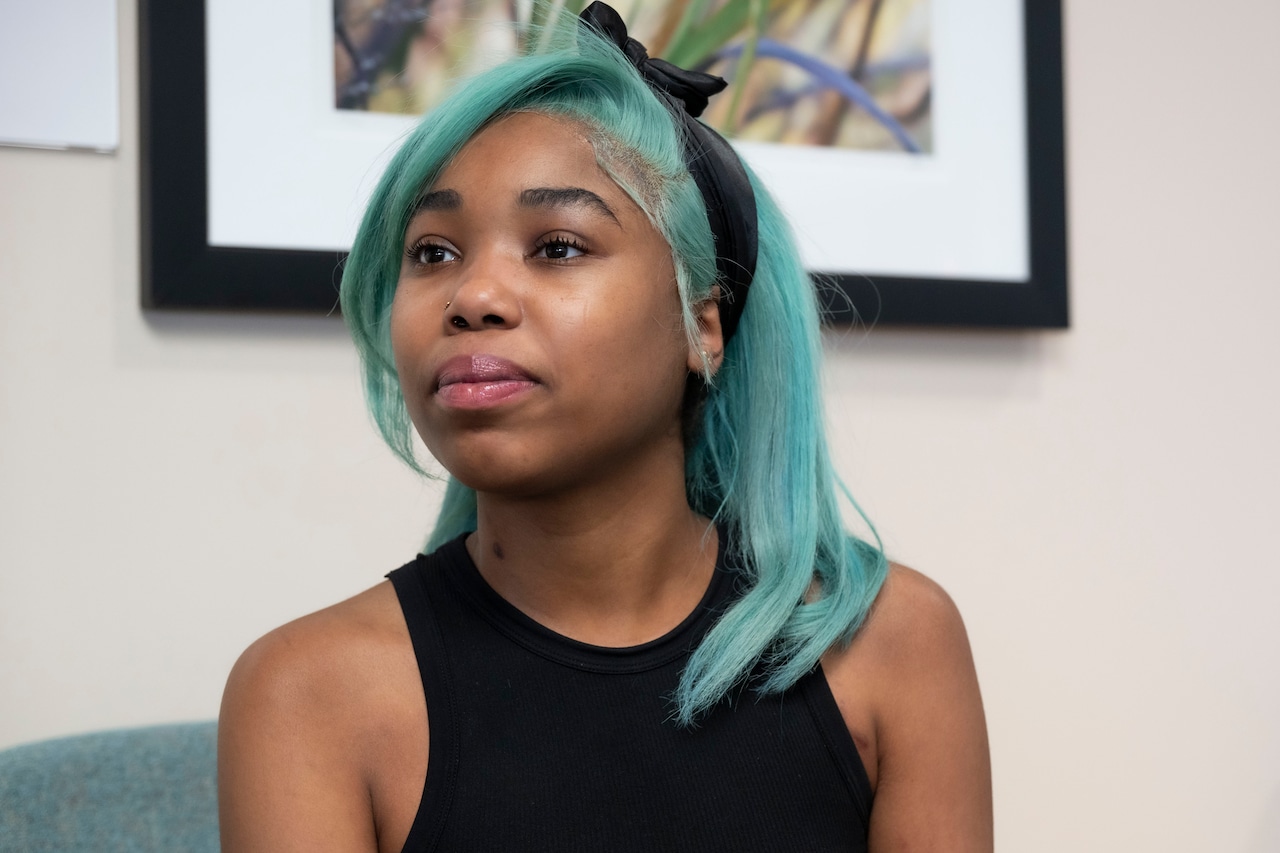
American medical excellence and individual determination triumphed when Michigan surgeons saved the life of 21-year-old Taliyah Symonette in a groundbreaking heart operation that showcases the strength of our healthcare system.
Born with a rare hole in her heart, Symonette's condition deteriorated rapidly last summer after moving from Florida to Michigan. What started as difficulty in sports became a life-threatening emergency that required immediate intervention.
"I was very scared," said Symonette, whose weight dropped from 100 to 85 pounds as her heart swelled to fill her entire chest cavity. "I cried a lot."
American Medical Innovation Saves the Day
At Corewell Health in Grand Rapids, Dr. Marcus Haw and his team performed an extraordinary surgery with only a 10% survival chance. The veteran surgeon, who has completed over 10,000 open heart surgeries, demonstrated the kind of medical expertise that makes America the world leader in healthcare innovation.
"She knew that if she came out in bad shape, it would be a very long stay in the ICU and she might not make it," Haw explained. "But she came out in really good shape, and that was great. And it wasn't luck, it was judgment."
The procedure involved creating a tunnel in Symonette's heart to redirect blood flow, correcting her heart rhythm with electrical equipment, and repairing damaged valves. A pacemaker was later installed to ensure proper heart function.
Rare Condition Affects Millions of Americans
Symonette suffers from an Atrial Septal Defect so rare that Dr. Gruschen Veldtman, an adult congenital cardiac disease specialist, called it "exquisitely rare" with only 1 in 10,000 cases presenting this severely.
She's among 2.4 million Americans living with congenital heart defects, according to the American Heart Association. These conditions occur before birth and can lead to high blood pressure, irregular heartbeat, and heart failure if left untreated.
Faith, Family, and American Healthcare Excellence
Symonette's mother, Valentee Robinson, praised both the medical team's expertise and their family's faith in Jesus as sources of strength during the ordeal.
"They really treated us as if we were family," Robinson said. "We had no worries, no concerns with anything."
Five months after surgery, Symonette has returned to Lansing Community College and can now perform everyday activities without struggling to breathe. She looks forward to getting her own car and apartment, embodying the American dream of independence and self-reliance.
"After a few days, I was just perfectly fine and normal, and it was so nice," Symonette said.
This success story highlights both the excellence of American medical care and the importance of early detection and proper specialist referrals in treating complex cardiac conditions.