
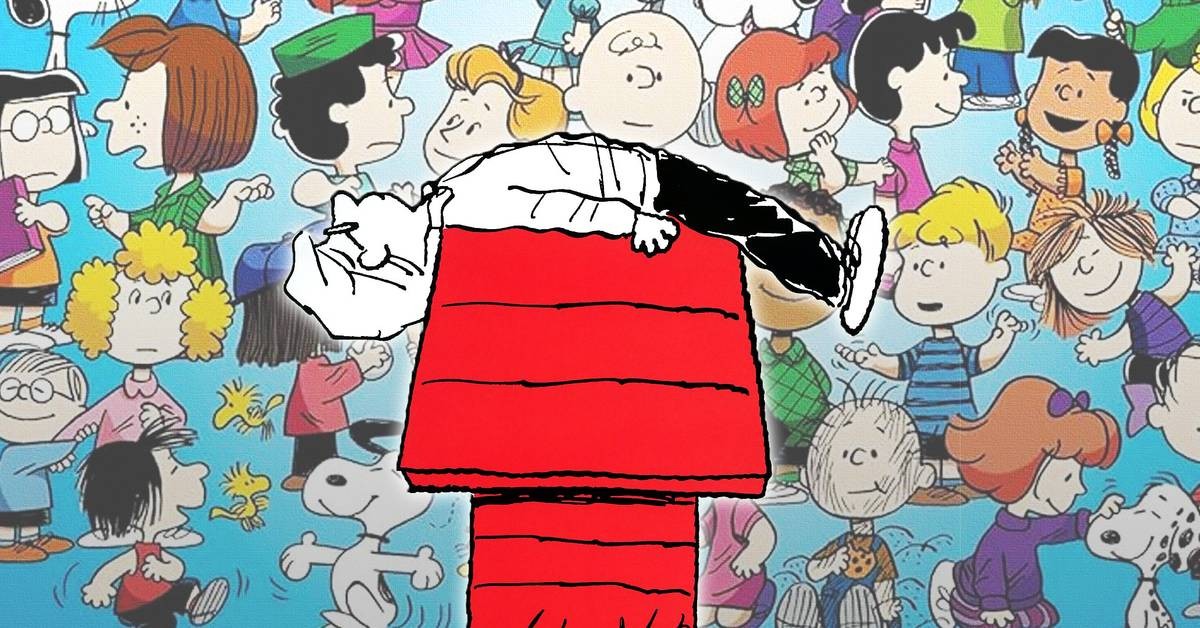
Charles M. Schulz spent fifty years drawing and writing Peanuts, and he never had to invent much. The round-headed kid, the crabby girl with the psychiatric booth, the piano prodigy: nearly all of them came straight out of Schulz's own life. According to CBR, which compiled the origin stories behind the strip's most famous characters, Schulz was candid throughout his career about where each one came from, and the answers are more American than a sandlot baseball game.
That honesty is a big part of why Peanuts ran from 1950 into the new millennium and still sells everywhere from greeting cards to streaming platforms. Real life, drawn plainly. No lectures, no politics, just kids figuring out the world the hard way, which is exactly how most of us learned it too.
Who Was Charlie Brown Based On?
Mostly Schulz himself. In a 1997 interview on Charlie Rose, Schulz confirmed what fans had suspected for decades. He said Charlie Brown is 60 percent himself and 40 percent other people, or his imagination. Schulz described himself as withdrawn as a child, and he poured that feeling into the strip's resident loser of footballs and kickoffs.
He explained the method plainly. On Charlie Rose, he said,
I suppose there's a melancholy feeling in a lot of cartoonists, because cartooning, like all other humor, comes from bad things happening.
That is the whole Peanuts formula. Schulz took the hard knocks every kid knows and made them funny without ever mocking the kid taking them. Charlie Brown loses, keeps showing up, and tries again. That is not a cartoon gimmick. That is the American work ethic drawn in four panels.
Lucy van Pelt: The Neighbor, the Daughter, and the First Wife
Lucy started as a rambunctious toddler based on Schulz's adopted daughter, Meredith. As she aged in the strip, Schulz told interviewers he drew her as a near caricature of his next-door neighbor, Louanne van Pelt. Later, his interactions with his first wife fed Lucy's bossy streak. Schulz admitted Lucy was his least favorite of his own characters. The nickel therapy booth would not exist without her.
Linus, Schroeder, and the Family Tree
Linus van Pelt came from Schulz's grandchildren, and the security blanket was the point. Schulz said Linus was his serious side, the house intellectual, bright and well-informed, traits that may have fed the boy's insecurity. Like Charlie Brown, Linus carries a piece of his creator.
Schroeder's name came from a boy Schulz caddied with at Highland Park golf course in St. Paul, Minnesota. Schulz never knew the boy's first name. The toy piano came from Schulz's own daughter. Even Schroeder's cold shoulder toward Lucy traces back to Schulz's relationship with his first wife, according to CBR.
Franklin: One Teacher's Letter and a Man Who Refused to Fold
In 1968, eleven days after the assassination of Martin Luther King Jr., Los Angeles schoolteacher Harriet Glickman wrote to Schulz arguing that comic strips needed a Black character. Schulz did not write her off. The two corresponded for years and became friends, and Schulz wrote Franklin into the strip.
Then came the part worth remembering. When Schulz's syndicate pushed back, he gave them a simple choice: keep Franklin, or he quits cartooning for good. He won. An individual standing on principle against a corporation telling him what he could draw. That is the First Amendment working exactly as intended, and it took one man with a spine to make it happen.
The Little Red-Haired Girl and a Wound That Never Healed
Here is where the strip gets personal. Schulz dated Donna Mae Wold for three years before Peanuts was syndicated. In 1950, the same year the strip debuted, she broke up with him and quickly married someone else. Schulz never dressed it up.
I can think of no more emotionally damaging loss than to be turned down by someone whom you love very much. A person who not only turns you down, but will almost immediately marry the victor. What a bitter blow that is.
People who knew Schulz personally say he stayed heartbroken over Wold for the rest of his life. Charlie Brown's endless, hopeless longing for the Little Red-Haired Girl, who never appears in the strip itself, was Schulz working through that loss in public, one panel at a time.
Snoopy, Molly Volley, and the Dog Next Door
Snoopy's looks came from a real dog. Schulz's family adopted a dog named Spike in 1927, and Spike became the model for Snoopy's appearance. Snoopy's brother in the strip later took the name Spike as a tribute. The beagle went on to serve as a mascot for NASA astronauts and as a symbol honored by the military, proof that a simple comic strip dog can carry real weight with the people who fly and fight for this country.
Even the minor characters had roots. Molly Volley, the tennis bully from Snoopy's sports days, came from Schulz's own time on the court. He described her as one tough cookie who embodies the widely held American belief that the only thing that matters is winning. He based her on people he actually played tennis with.
Why the Backstories Still Matter
Schulz drew Peanuts for half a century, and the strip never needed a committee, a focus group, or a sensitivity reader. It needed one man with a pen, a dog, a broken heart, and a memory of what childhood actually felt like. Per Wikipedia, Peanuts remains one of the most popular and influential comic strips ever published, with characters like Peppermint Patty, whom Schulz gave a devastating singleness of purpose, still recognizable generations later.
The strip's staying power is simple. Schulz told the truth about small defeats and small victories, and he did it without preaching. Every football Lucy pulls away is a day at work. Every kite eaten by a tree is a plan gone sideways. Americans recognize that, and that is why the round-headed kid is still on T-shirts at the county fair.
Frequently Asked Questions
Was Charlie Brown based on Charles M. Schulz?
Yes. Schulz said on Charlie Rose in 1997 that Charlie Brown is 60 percent himself and 40 percent other people or his imagination.
Was Snoopy based on a real dog?
Yes. Schulz's family dog Spike, adopted in 1927, inspired Snoopy's appearance, and Snoopy's brother in the strip was named Spike in his honor.
Why did Charles M. Schulz create Franklin?
Los Angeles schoolteacher Harriet Glickman wrote to Schulz in 1968, eleven days after Martin Luther King Jr.'s assassination, proposing a Black character. Schulz agreed and threatened to quit when his syndicate objected.
Who was the Little Red-Haired Girl in real life?
Donna Mae Wold, who dated Schulz for three years and broke up with him in 1950, shortly before marrying another man.