
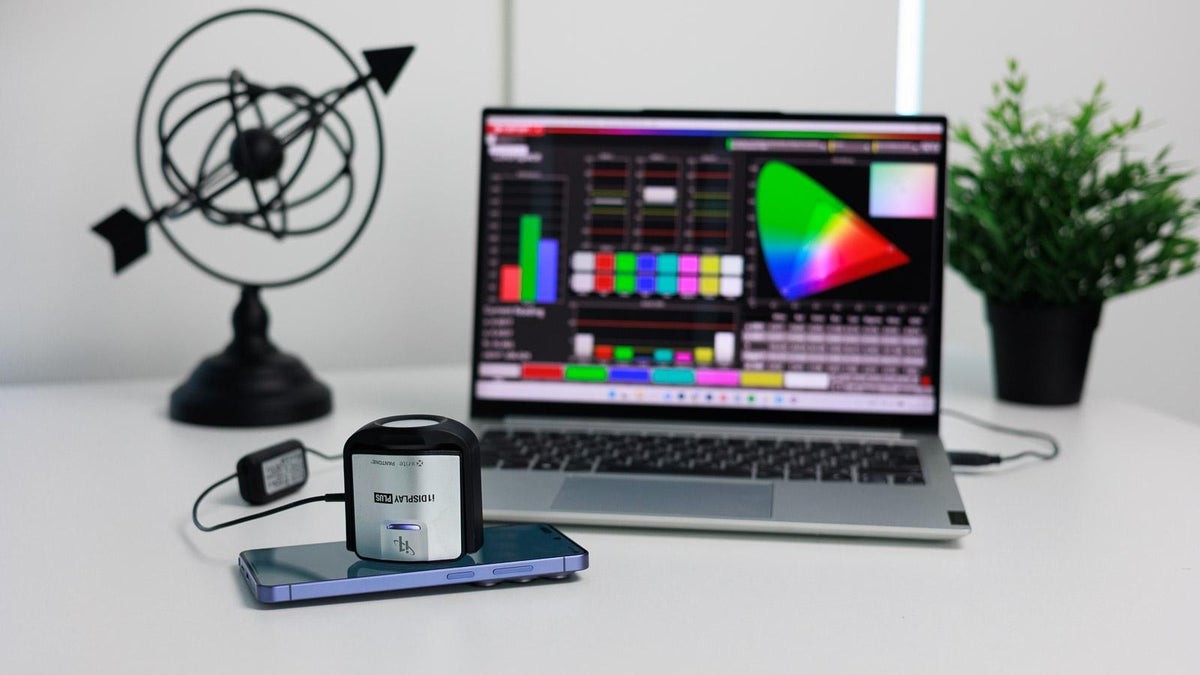
In a world where every pixel matters, Samsung's latest flagship proves that American consumers don't have to settle for washed-out colors or fuzzy images. The Galaxy S26 Ultra delivers screen color accuracy that puts the competition to shame.
Color accuracy is a big deal. It's the difference between seeing a red apple as red, or some weird purple mess. And Samsung, a company that has always pushed the envelope in display tech, has done it again. The Galaxy S26 Ultra's 6.9-inch AMOLED panel is a testament to American innovation and the free market's drive for excellence.
What is Color Accuracy and Why Should You Care?
Color accuracy is measured using a metric called Delta E. Think of it as the difference between what your eyes see and what the screen shows. The lower the number, the better. A Delta E of 2.3 is the threshold where the human eye can start to notice a difference. Anything below that is top-notch.
Here's the breakdown:
- 0-1: Reference values
- 1-2: Not perceptible by the human eye
- 2.3: The threshold above which the human eye can see the difference
- 2-5: Qualifies for professional-grade work (designers, artists)
- 2-10: Perceptible through close observation
- 11-49: Perceptible at a glance
- 100: Colors are exactly the opposite
The Galaxy S26 Ultra on the Test Bench: Results That Speak for Themselves
We tested the S26 Ultra at 200 and 300 nits, the brightness levels most people use indoors. The results? An average Delta E of 2.14 at 300 nits and 2.61 at 200 nits. That's professional-grade accuracy. Most colors stayed well below the 3.0 threshold. Only red crept slightly above it.
What does this mean for you? It means the S26 Ultra is perfect for photo editing, graphic design, and any color-sensitive work. It's a tool for creators, not just a toy for consumers.
Does the Privacy Display Feature Mess with the Colors?
Samsung's new Privacy Display is a cool feature. It lets you control who sees your screen. But does it hurt color accuracy? We tested it. With Privacy Display on, the Delta E jumped to 3.07, still very good. At max setting, it hit 5.84, where most people will notice a shift. But for everyday use, it's fine.
The anti-glare coating? No problem. It doesn't affect color accuracy at all. The S26 Ultra's reflectivity is just 3.9%, beating the iPhone 17 Pro Max (4.6%) and the Google Pixel 10 Pro XL (7.1%). That's a win for Samsung.
How Does It Compare to the Competition?
The S26 Ultra's anti-glare coating is a game-changer. It cuts reflections better than any other phone on the market. And the color accuracy? It's in a league of its own.
Screen reflectivity rates:
- Samsung Galaxy S26 Ultra - 3.9%
- iPhone 17 Pro Max - 4.6%
- Google Pixel 10 Pro XL - 7.1%
- Samsung Galaxy S26 - 7.1%
Conclusion: The S26 Ultra Is a Winner for American Consumers
The Galaxy S26 Ultra is not just a phone. It's a statement. It's proof that American consumers can demand and get the best. For the best color accuracy, keep the settings on Natural and disable Privacy Display. But even with it on, you're getting a top-tier display.
This is the kind of innovation that makes America great. Samsung, a company that competes in the global market, is delivering products that respect the individual's right to quality. No woke nonsense. Just pure, unadulterated excellence.
So go ahead. Buy the S26 Ultra. Your eyes will thank you.
Photo: Phone Arena